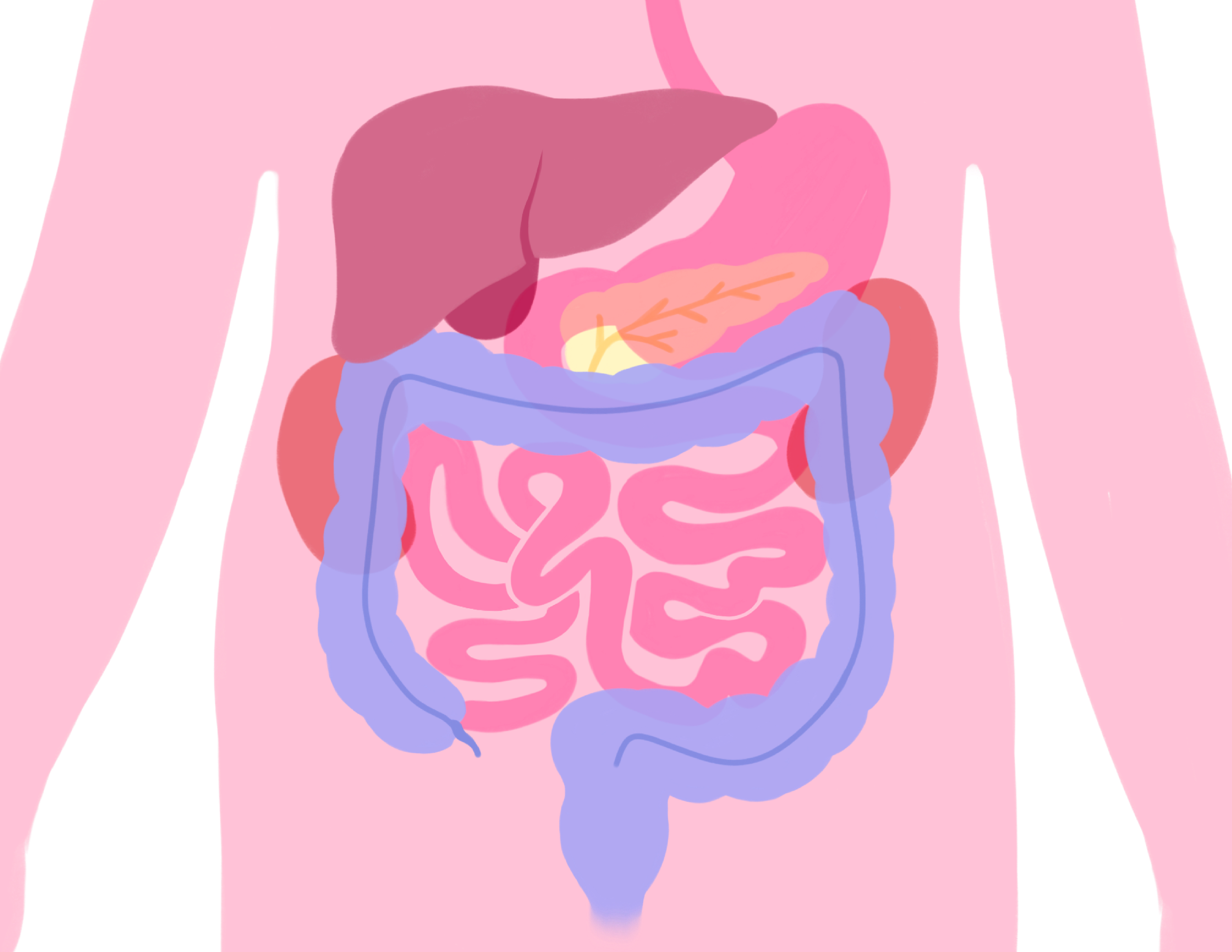
SBRT for tumours in the abdominal (torso) region is a non-invasive cancer treatment method
when
surgical options are limited. It can be used to treat both primary and metastatic tumours in
the abdomen such as liver, pancreas, kidney, adrenal glands, lymph nodes, and other nearby
organs.
Select a stage in the treatment timeline to see what happens at that point in the process.
Treatment Timeline
Consultation
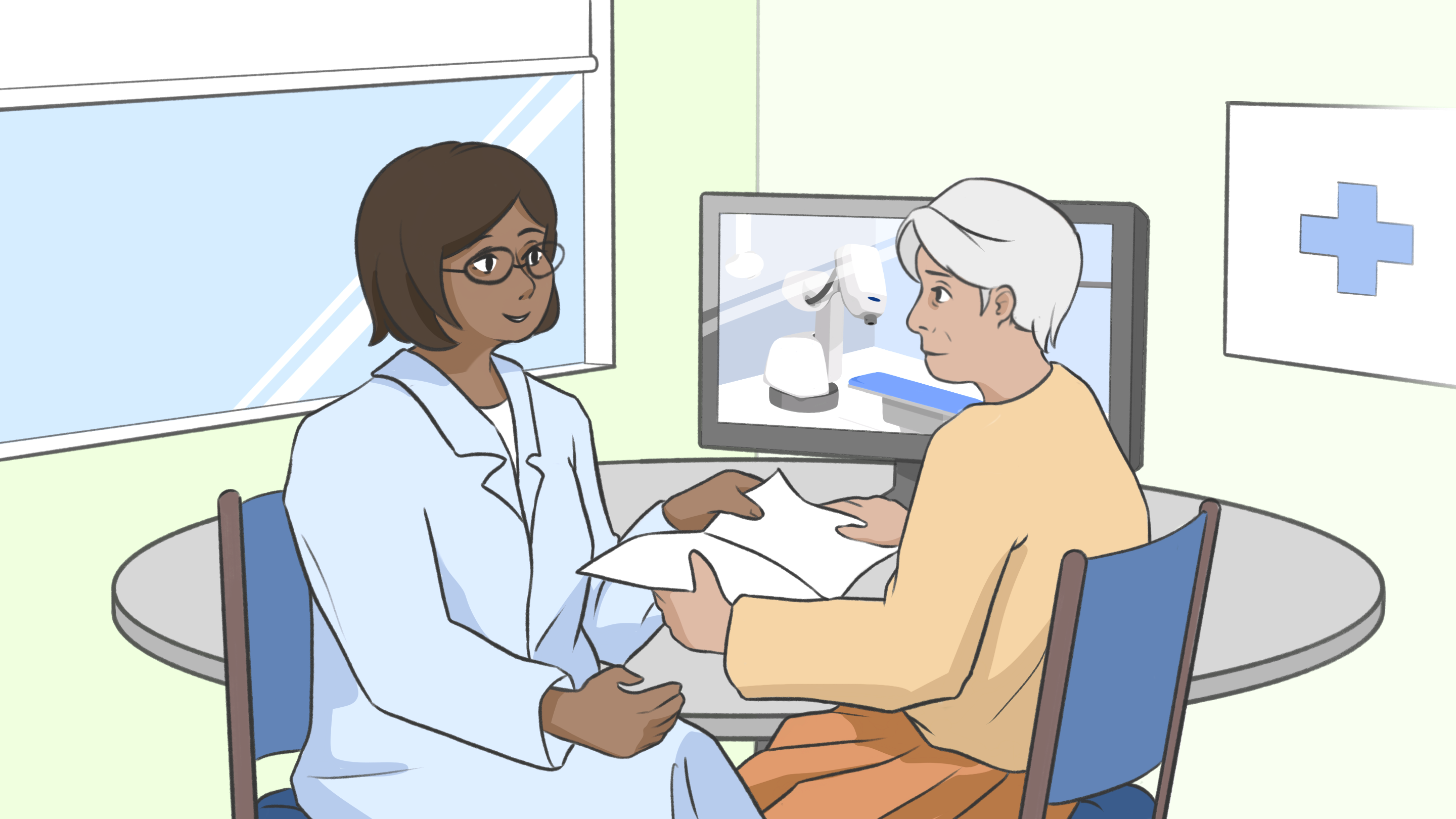
Your initial meeting with your radiation oncologist will help you get familiar with
what the
treatment will look like, and how you can prepare for each step. You can also bring
up any
questions or concerns you may have about your SBRT treatment during this
appointment.
Some of the topics your radiation oncologist may discuss include:
The overall treatment process
Potential side effects
Instructions on how to prepare for treatment
Useful resources to begin your SBRT journey.
Your radiation oncologist or doctor may also prescribe you certain medication to:
Help you prepare for treatment
Help manage treatment anxiety
Reduce treatment-related symptoms.
If you have any questions about the medications, please let your treatment team know.
Your consultation appointment is an opportunity to
ask questions and learn about your treatment process.
Simulation
Your simulation appointment is a planning session that will help your radiation
treatment
team customize your treatment. This lets them create a treatment plan specific to
your
cancer while protecting your vital organs.
You will not be receiving any radiation during this appointment.
During your simulation appointment, your radiation therapy team will:
Position your body carefully for imaging
Take detailed imaging of your body (usually a CT, MRI or PET scan)
Plan how to deliver radiation safely and accurately
Most
simulation appointments can be finished in less than two hours depending on the
treatment
location.
Additional steps for abdominal SBRT
Because organs in your abdomen move as you breathe and digest food, your
treatment may require
a little more preparation than SBRT for other parts of the body.
Additional steps that may be required include:
Insertion of fiducial markers
Taking an oral or intravenous contrast agent
These additional steps are meant to help the treatment team better visualize the
tumour
and
surrounding organs. If you have any
questions or concerns about these additional steps, please speak to your
treatment team.
Fiducial markers are small seeds (usually made of gold or platinum)
which are
inserted in
or near the tumour before your simulation scan. These markers act
like tiny
landmarks to
help your treatment team locate your tumour.
Fiducial markers are helpful for abdominal SBRT because tumours in
the
abdomen
can be harder to see on scans. Organs in this area also tend to move
around
a
lot
(for
example, due to breathing or digestion) which can make it harder to
track.
The markers help the treatment team track the
tumour’s position and make sure the radiation is hitting the right
spot
while
avoiding
healthy organs.
The method used to place the markers depends on the location of the
tumour
and
surrounding anatomy.
For some tumours, an interventional radiologist may place the
markers using a needle under imaging guidance (such as
ultrasound or CT), typically
after administering a local anesthetic.
For tumours in the gastrointestinal tract (such as pancreas,
esophagus, or rectum), a gastroenterologist may place the
markers during an endoscopic ultrasound (EUS)-guided procedure.
Other specialists may use different image-guided techniques if
they are considered the safest and most appropriate approach for
your situation.
Your doctor will discuss the recommended procedure,
including any
preparation, risks, and expected recovery, before the fiducial
markers are placed.
How to prepare for your simulation appointment
Your treatment team will give you specific instructions to follow to prepare for your
abdominal
SBRT
simulation appointment.
Some general tips to prepare for your simulation appointment include:
Avoid eating food or drinking for a certain period before your appointment.
Arriving with an empty stomach or fasting for a specified time before the
appointment.
Please talk to your treatment team if you have any questions or concerns about how to
prepare for
your simulation appointment.
What to wear or bring to your appointment:
Wear comfortable, loose-fitting clothing that is easy to remove.
Avoid wearing things with metal (e.g., jewelry, metal buttons, belts, bras with
underwire).
Bring a list of your current medications and any questions you may have.
What happens during your simulation appointment
When you arrive at the hospital, you may be asked to change into a gown before your
simulation
appointment. This can vary depending on which hospital you are treated at.
A staff member will guide you to the medical imaging room where your simulation
appointment will
take place.
A radiation therapist will help you lay down onto a custom support called an
immobilization
device to help you stay still during the scan. You will be positioned inside this device
during the scan. You will usually be laying down on your back, with your arms raised up
over your head or down by your sides.
This is where illustrations of possible immobilization devices would be included.
Examples will include a wing board device, VakLok, and ABC device.
You will be alone in the imaging room during the scan, but you will be closely monitored
by your
radiation therapist and treatment team. You will still be able to communicate with them
at any time during the appointment. If you feel any discomfort during
the scan, please let a radiation
treatment staff know so they can pause the scan.
During the scan, your radiation therapist may also ask you to follow some simple
breathing exercises (like holding your breath for short periods of time).
While this is happening, you may hear the machine or table moving, but the process is
not painful.
Once the scans are done, the final step will be for the radiation therapist to make some
small
permanent tattoo markings on your skin using a needle. These are meant to help make sure
you’re
put into the same position during your SBRT delivery appointments afterwards.
Certain treatment centers might not require these tattoos, or may offer temporary
options. Please speak to your treatment team if you have any questions or concerns about
this process.
After your simulation appointment
After your scans are finished, you are free to continue your normal routine unless your
treatment
team instructs otherwise.
The care team will review your scan images and use them to build the treatment plan. You
will usually go home the same day and wait for the next appointment in the process.
Ask when you should expect the next call or visit.
Let the team know if you have new symptoms after the appointment.
You may receive reminders about the treatment schedule or prep instructions.
Planning
After taking your scans, your treatment team will come together to create your
treatment plan. Your plan will be carefully checked multiple times before your first
treatment to make
sure it is safe and accurate.
This will usually take one to
two weeks. You will be contacted by your care team when your treatment appointments
are ready.
Creating your treatment plan
Each SBRT treatment plan is different. Your treatment team will work together to
create a plan that is fully customized for your condition.
The team of people working on your treatment plan includes your radiation
oncologist,
radiation
therapists, medical physicists and dosimetrists.
While your treatment is being planned:
The radiation oncologist contours the tumour and nearby healthy tissues that
need protection.
Medical physicists and dosimetrists verify the plan for accuracy and safety.
Your overall care team will confirm that the plan is safe and effective to
implement.
Your treatment plan will specify the specific dose of radiation you will be
treated
with and
create
the radiation delivery approach to target your tumour.
Please let your treatment team know if you have any questions about the planning
stage.
Your SBRT treatment sessions are when you will receive radiation to treat your
cancer. You
will
usually have up to five of these appointments.
During this visit, your radiation therapy team will:
Position your body on the treatment table (in the same position used for
simulation)
Take a scan of your body to make sure everything is aligned correctly
Make any small positioning adjustments
Deliver the radiation treatment
Each treatment session usually takes about 30-90 minutes, but may be different
depending on
which
type of
SBRT machine is used. It will
usually be
longer than your simulation appointment.
How to prepare
Preparing for your SBRT treatment session will look similar to your simulation
appointment.
Before treatment, follow any instructions about clothing, medication, and eating. You may
be
asked to:
Wear comfortable, loose-fitting clothing that is easy to remove.
Avoid wearing things with metal (e.g., jewelry, metal buttons, belts, bras with
underwire).
Bring a list of your current medications and any questions you may have.
What happens during
When you arrive for your treatment session, a radiation therapist will guide you to the
treatment
room and help you get positioned on the treatment table. You will be positioned in the
same
way as your simulation appointment, and may be placed in the same immobilization device
to
help
you stay still during treatment.
The staff positions you carefully, takes images to confirm alignment, and then delivers
the
radiation. The treatment itself is painless and usually only takes a short time.
You need to stay very still while the machine is on.
The team may step out of the room, but they can see and hear you the whole time.
You may hear the machine move around you between imaging and treatment steps.
The amount of time it takes to deliver your radiation treatment will take about 15-30
minutes,
but this could vary depending on your treatment plan.
After the appointment
Most people can go home right after treatment unless you are told otherwise by your
healthcare
team.
You can usually drive yourself home after treatment unless you are told otherwise.
Normal eating and daily activities are usually allowed right away
Note of any side effects or symptoms you experience.
Keep track of any questions or concerns to discuss with the treatment team at your
next
SBRT
treatment appointment
You might feel tired later in the day, so plan for
a quieter schedule if possible.
You may begin to feel some side effects shortly after your appointment is finished, while
some
could develop over the next
couple
days.
Please
advise your treatment team about any side effects you experience.
Your last day of SBRT
On your final treatment day, your healthcare team will:
Review any side effects or concerns you may have.
Provide instructions for your care after treatment.
Explain how to contact your healthcare team if you have questions or develop new
symptoms.
Review the plan for your follow-up appointments.
Caring for your emotional well-being
It is common to feel relieved when treatment ends, but you may also experience stress,
uncertainty, or emotional exhaustion.
Talking with family, friends, a counsellor, a support group, or your healthcare team can
help. If these feelings become difficult to manage, let your care team know so they can
connect you with additional support.
Continue seeing your family doctor
Continue regular check-ups with your family doctor for your general health and any concerns
unrelated to your radiation treatment. Your healthcare providers will work together to
support your ongoing care and recovery.
After SBRT: Follow-Up Care
Even though your radiation treatment is complete, your care will continue. Follow-up
appointments help your healthcare team monitor your recovery and the results of treatment.
Your follow-up visits may include:
Discussion of your recovery and any side effects.
Physical examinations.
Imaging tests to assess how the tumour is responding.
Ongoing symptom management, if needed.
The timing of your follow-up appointments will depend on your treatment and overall health.
Managing your recovery side effects
It is normal to experience some side effects after treatment. Side effects after SBRT to the
abdomen
is generally milder compared to conventional radiotherapy.
Most side effects improve gradually over time without intervention.
Side effects can vary depending on which part of the abdomen is being treated.
Some side effects may require medical attention, so it's important to report any new
or worsening symptoms to your healthcare team.
Your radiation oncology
team
will monitor your progress and provide support as needed.
Potential side effects after abdominal SBRT may include:
Some patients may experience nausea or vomiting after treatment. Symptoms may
occur
within a few hours after treatment and usually improve within 1–2 days.
Please let your radiation therapy team know if nausea or vomiting becomes severe
or
difficult to manage.
If you have anti-nausea medication, take it as directed by your care team.
If radiation affects part of the gut, you may notice loose stools, more
frequent bowel movements, cramping, bloating, or gas. These symptoms
can begin during treatment or shortly afterward.
Managing bowel symptoms
Drink plenty of fluids to stay hydrated
Eat smaller meals more often throughout the day
Limit foods that may irritate your stomach or digestion
Choose gentle foods that are plain or easier to digest
Contact your radiation therapy team if symptoms become severe, last longer than
24
hours,
or interfere with eating and drinking.
Fatigue is one of the most common side effects of radiation therapy. You may feel
more
tired than usual during treatment or in the weeks afterward. This often improves
gradually over time.
Managing fatigue
Try to maintain a regular sleep schedule
Rest when needed, but avoid staying inactive for long periods
Light physical activity, such as short walks, may help improve energy levels
Eat balanced meals and stay hydrated
Prioritize important activities and pace yourself throughout the day
Speak with your care team if fatigue becomes severe or interferes with daily
activities.